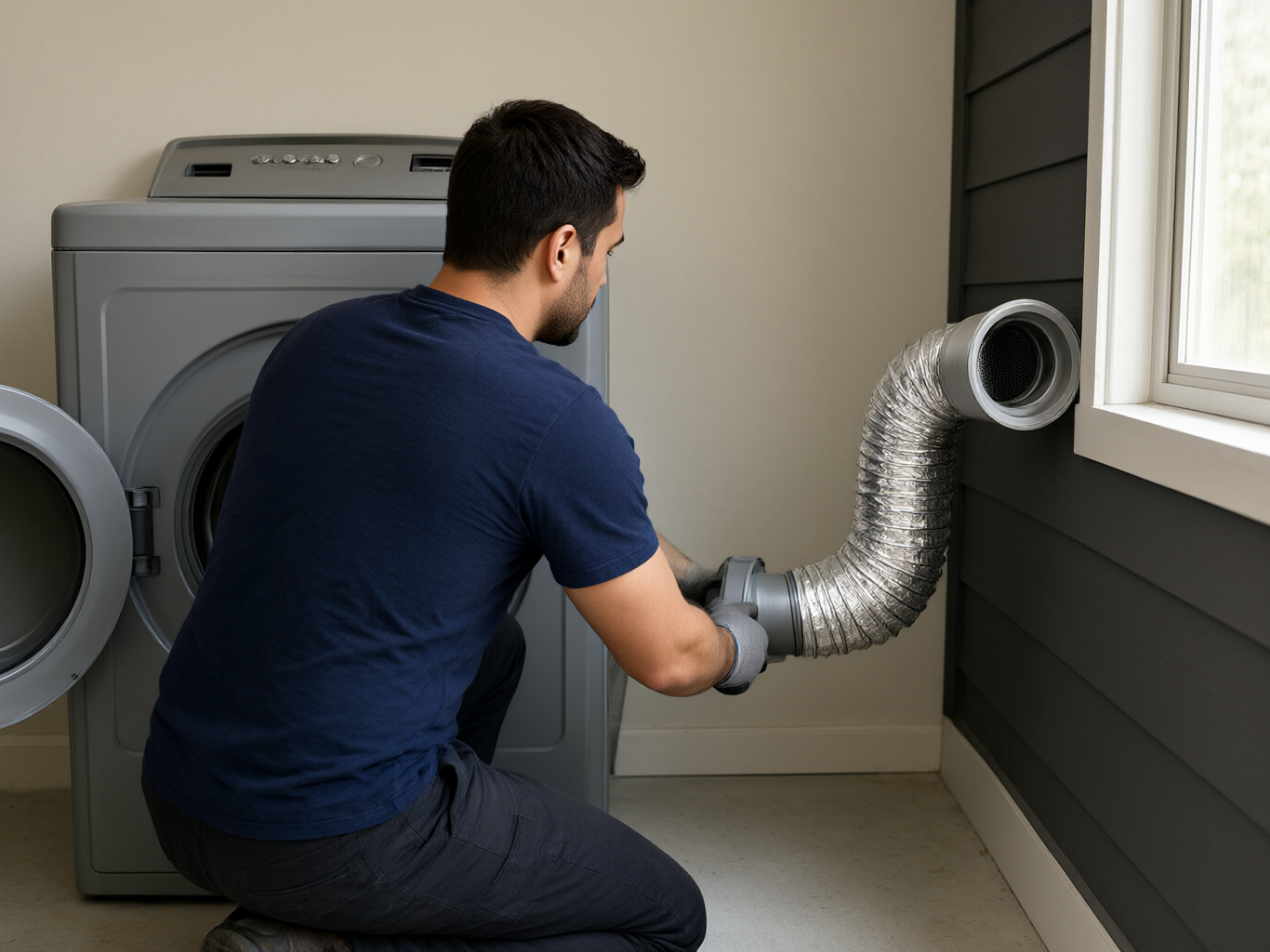
A dryer vent inspection starts at the laundry room termination point and traces the full exhaust path to the exterior wall cap, checking for crushed semi-rigid aluminum, lint buildup inside galvanized steel runs, and improper plastic foil transitions that code no longer permits. In Tyler's humid subtropical climate, moisture from hot summers and mild winters can condense inside long duct runs, turning trapped lint into a compacted slab that restricts airflow and forces the dryer high-limit thermostat to cycle constantly. We measure static pressure at the dryer connection and at the termination, inspect rooftop and sidewall vents common in Smith County homes, and verify that the damper opens freely without bird nests or debris. Plastic transition ducts are flagged for replacement, and any run exceeding twenty-five feet without a booster is evaluated for code compliance.
Older bungalows near Downtown Tyler and the Azalea District often have vent exits through brick or stucco walls where the original metal flashing has corroded, letting humid Smith County air leak back into the cavity and dampen insulation. In Charnwood and Hollytree, newer construction frequently routes the dryer exhaust through attic trusses before exiting the roof, which creates long horizontal runs that collect lint at low points and sag over time. We inspect attic penetrations for crushed ducting and check that roof caps are not sealed shut by paint or caulk, a common shortcut we see on homes built during the early 2000s boom. For customers in whitehouse and lindale, we also evaluate whether the exterior wall cap is positioned above grade and clear of landscaping mulch, since ground-level terminations invite pests and restrict discharge.
Every inspection includes a carbon-monoxide and combustion-air check for gas dryers, because a blocked vent can force exhaust back into the laundry room and create a backdraft hazard in tight Smith County utility closets. We test airflow with an anemometer at the termination and compare it to the manufacturer's rated cubic-feet-per-minute, then inspect the lint screen housing, blower wheel access, and moisture sensor bars for residue that reduces drying efficiency. Electric dryers are checked for loose terminal connections and frayed power cords, while gas units receive a shutoff-valve inspection and flexible gas-line review. We never use a leaf blower to push lint through a vent, since that can compact debris farther into the run and damage thin-wall ducting, and we always replace any white vinyl transition duct discovered behind the machine.
Technician insight
In Tyler, the thing that catches most people out with a dryer vent inspection is how quickly lint packs down inside long attic runs during our humid summers. Homeowners in Charnwood and Hollytree often assume the vent is clear because the dryer still heats up, but weak airflow means the high-limit thermostat is cycling and the element is working overtime. I always check the exterior cap after a rain, because Smith County soil and heavy spring runoff can push mulch and debris right up against the wall termination.
Sidewall Vent Blockage in a Hollytree Ranch Home
A homeowner in Hollytree reported clothes taking two cycles to dry despite a clean lint screen. We found the exterior sidewall damper stuck shut from windblown debris and a sagging semi-rigid aluminum run in the attic that had collected a dense lint mat at a low point. We replaced the damaged duct section, cleared the damper, and verified airflow at the termination matched the dryer's rated output. The unit now dries a full load in one cycle and runs cooler.
Dryer Vent Inspection & Airflow Check Services We Offer
✓Full Vent Path Pressure Test
We measure static pressure at the dryer connection and exterior wall cap to pinpoint restrictions caused by crushed semi-rigid aluminum or lint compaction inside long Smith County runs.
✓Exterior Wall Cap and Damper Inspection
We verify the sidewall or roof cap opens freely, is clear of bird nests and mulch, and discharges above grade so humid Tyler air does not backdraft into the laundry room.
✓Transition Duct Material Review
We inspect the short connector behind the dryer for white vinyl or unlisted foil and replace non-compliant sections with listed semi-rigid aluminum to meet current safety standards.
✓Attic and Crawlspace Duct Survey
We trace horizontal runs through attic trusses or crawlspaces common in Charnwood and Hollytree homes, checking for sagging, crushed sections, and disconnected joints that reduce airflow.
✓Gas Dryer Combustion and Vent Safety Check
For gas appliances, we inspect the shutoff valve, flexible gas line, and exhaust path to confirm combustion gases are venting outdoors and not spilling into a tight utility closet.
✓Dryer Moisture Sensor and Blower Housing Cleaning
We remove residue from moisture sensor bars and inspect the blower wheel housing for lint buildup that forces the dryer to run longer and hotter than necessary.
Dryer Vent Inspection & Airflow Check Cost in Tyler, TX
| Service | Typical Range | What Affects It |
|---|---|---|
| Standard Dryer Vent Inspection & Airflow Check | $99–$149 | Single-story Tyler home with accessible exterior wall cap; includes pressure readings and written report. |
| Extended Vent Path Inspection | $149–$225 | Multi-story or long attic/crawlspace runs in Charnwood, Hollytree, or Smith County; additional access time. |
| Transition Duct Replacement | $45–$85 | Replacing non-compliant white vinyl or foil with listed semi-rigid aluminum; materials and labor. |
| Exterior Wall Cap Service | $75–$125 | Cleaning, damper adjustment, or cap replacement if blocked by debris or corrosion. |
Ranges are typical for Tyler, TX and confirmed with an exact written quote before any work starts.
How it works
- 1
Initial Airflow Measurement
We record static pressure and cubic-feet-per-minute at the dryer connection and exterior termination to establish a baseline before any disassembly.
- 2
Full Path Visual Inspection
We trace the vent from the laundry room through walls, attics, or crawlspaces to the wall cap, identifying crushed ducting, unlisted transition materials, and blockages.
- 3
Component Testing and Cleaning
We test dampers, verify gas shutoff operation where applicable, clean sensor bars and blower access, and replace non-compliant transition duct.
- 4
Final Verification and Report
We re-measure airflow after service, confirm the exterior cap opens under pressure, and provide a written summary of findings and recommendations.
Pricing
Pricing for a dryer vent inspection and airflow check depends on vent length, accessibility of attic or crawlspace runs, the number of termination points, and whether non-compliant transition duct needs replacement. We provide upfront quotes before starting work.